What does 'RAIN RFID' actually mean?
RAIN is a backronym for 'RAdio frequency IdentificatioN,' coined by the RAIN Alliance as a neutral, brand-independent label for passive UHF RFID — much as 'Wi-Fi' and 'Bluetooth' are neutral names for their underlying radio standards. It is not a proprietary product.
Technically, RAIN RFID means tags and readers that implement the EPC Gen2 (now Gen2v2) protocol, ratified as the international standard ISO/IEC 18000-63 and operating in UHF bands between roughly 860 and 960 MHz. When a vendor says 'RAIN RFID,' they mean interoperable passive UHF hardware built to that standard.
How does passive UHF RFID work?
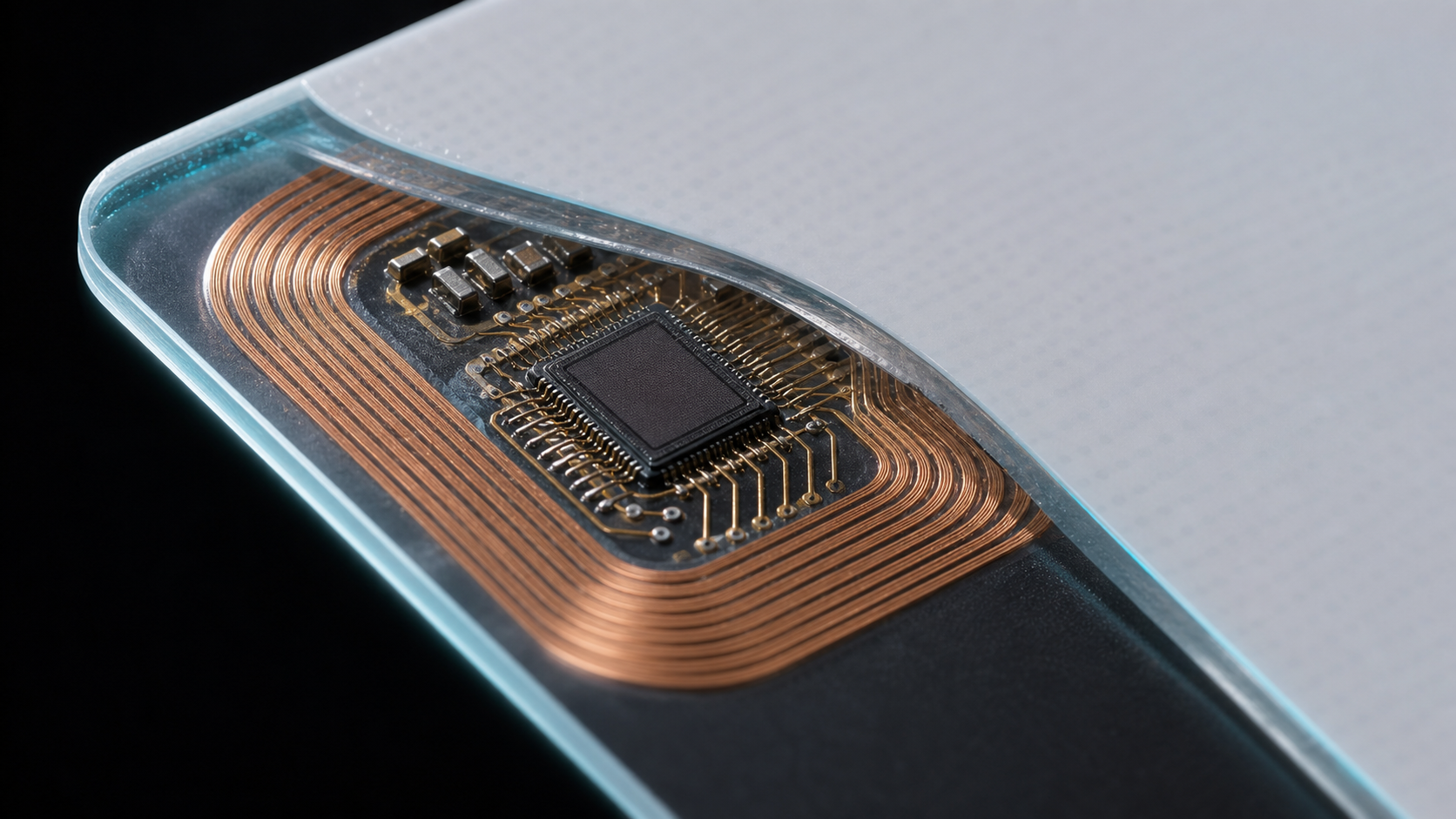
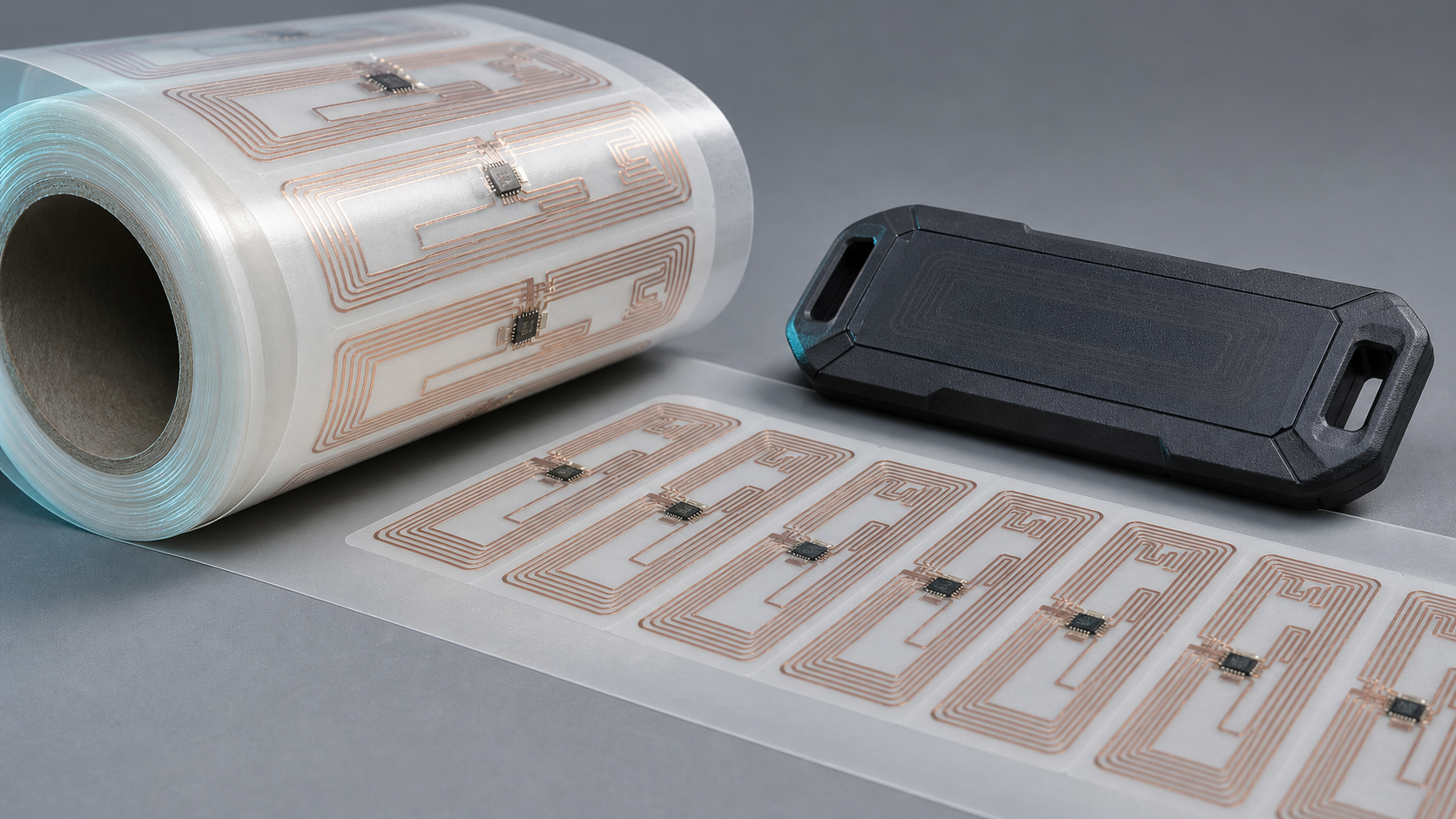
A RAIN tag is just a small silicon chip attached to a printed antenna, with no internal power source. When it enters a reader's UHF field, the antenna harvests enough energy to power the chip, which replies by modulating and reflecting the reader's signal back — a technique called backscatter.
Because the tag is battery-free, it is cheap, thin and long-lived, and can be embedded in a paper label or product tag. The reader supplies all the energy and does all the heavy lifting, which is why RAIN infrastructure is more capable (and more expensive) than the tags it reads.
What is RAIN RFID used for?
The headline use case is retail inventory accuracy: apparel and general-merchandise retailers tag items at the source and count entire stockrooms and sales floors in minutes with a handheld or overhead reader, closing the gap between recorded and actual inventory. That same 'count everything fast' capability drives warehouse and logistics tracking, work-in-process visibility on production lines, returnable-asset and tool tracking, document and evidence file management, and airline baggage handling.
A RAIN tag's memory typically holds an EPC (the item identifier), a factory-locked TID that uniquely identifies the chip, and optional user memory — enough to serialize every physical item rather than just its product type.
How is RAIN RFID different from barcodes?
A barcode has to be seen to be scanned: it needs line of sight, direct optical contact and one scan per code. RAIN RFID needs neither — it reads through packaging and around corners, captures many tags at once, and works at meters of range, so a full inventory becomes a walk-through rather than a scan-by-scan chore.
Barcodes remain cheaper per label and are effectively free to print, so they will not disappear. But where item-level speed, serialization or hands-free reading matters, RAIN's throughput changes what is operationally possible.
How does it compare with HF RFID and NFC?
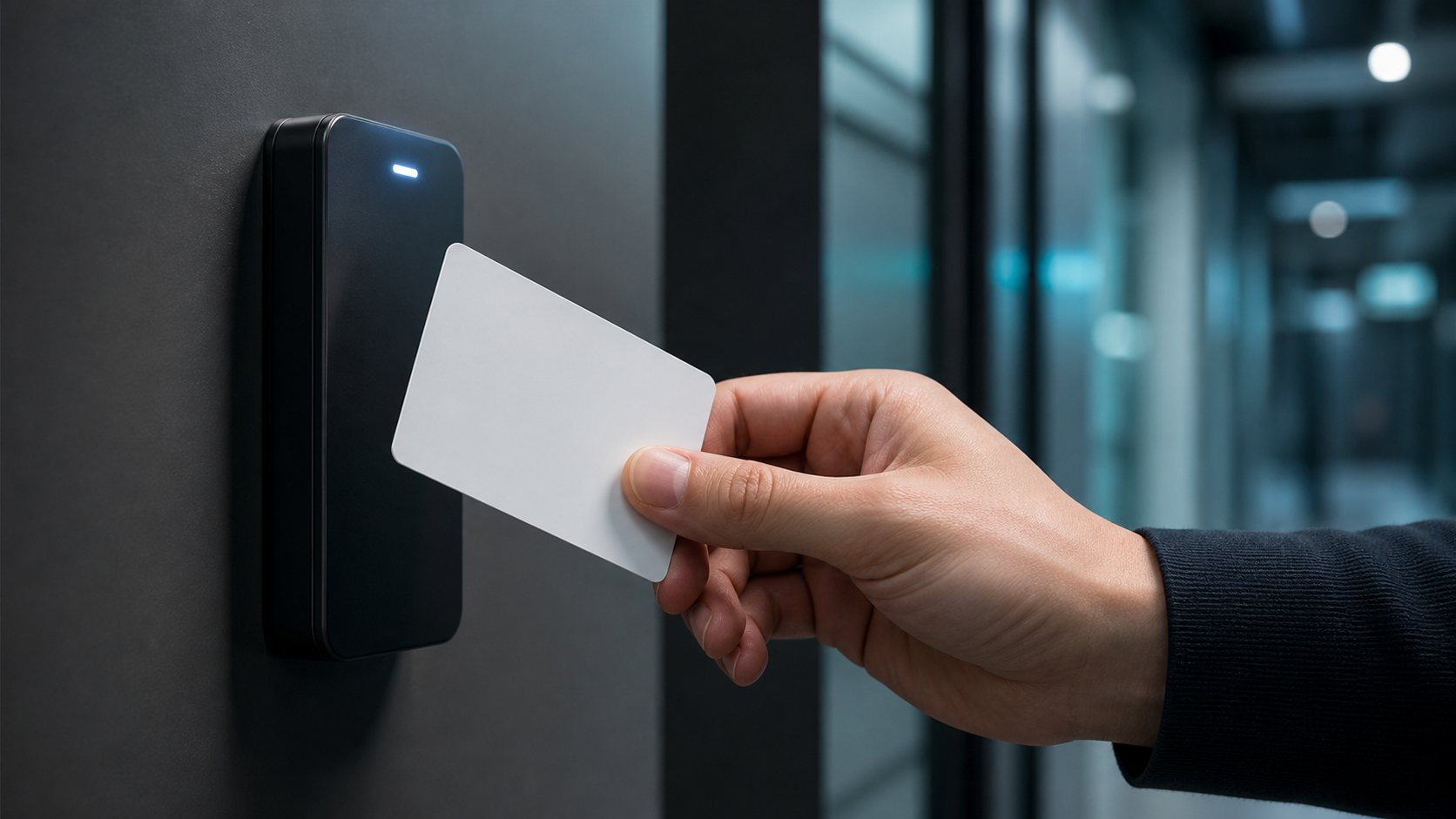
HF RFID and NFC (13.56 MHz) are near-field, short-range technologies designed for one deliberate interaction at a time — a tap to pay, badge in or read a single smart tag at a few centimeters. RAIN RFID is far-field and built for the opposite job: reading many tags at distance, quickly.
In practice they are complementary rather than competing. HF/NFC owns secure credentials, payment and consumer phone taps; RAIN owns bulk item visibility across a store, warehouse or supply chain. Choosing between them comes down to whether you need a secure single interaction or fast identification of a crowd of items.